
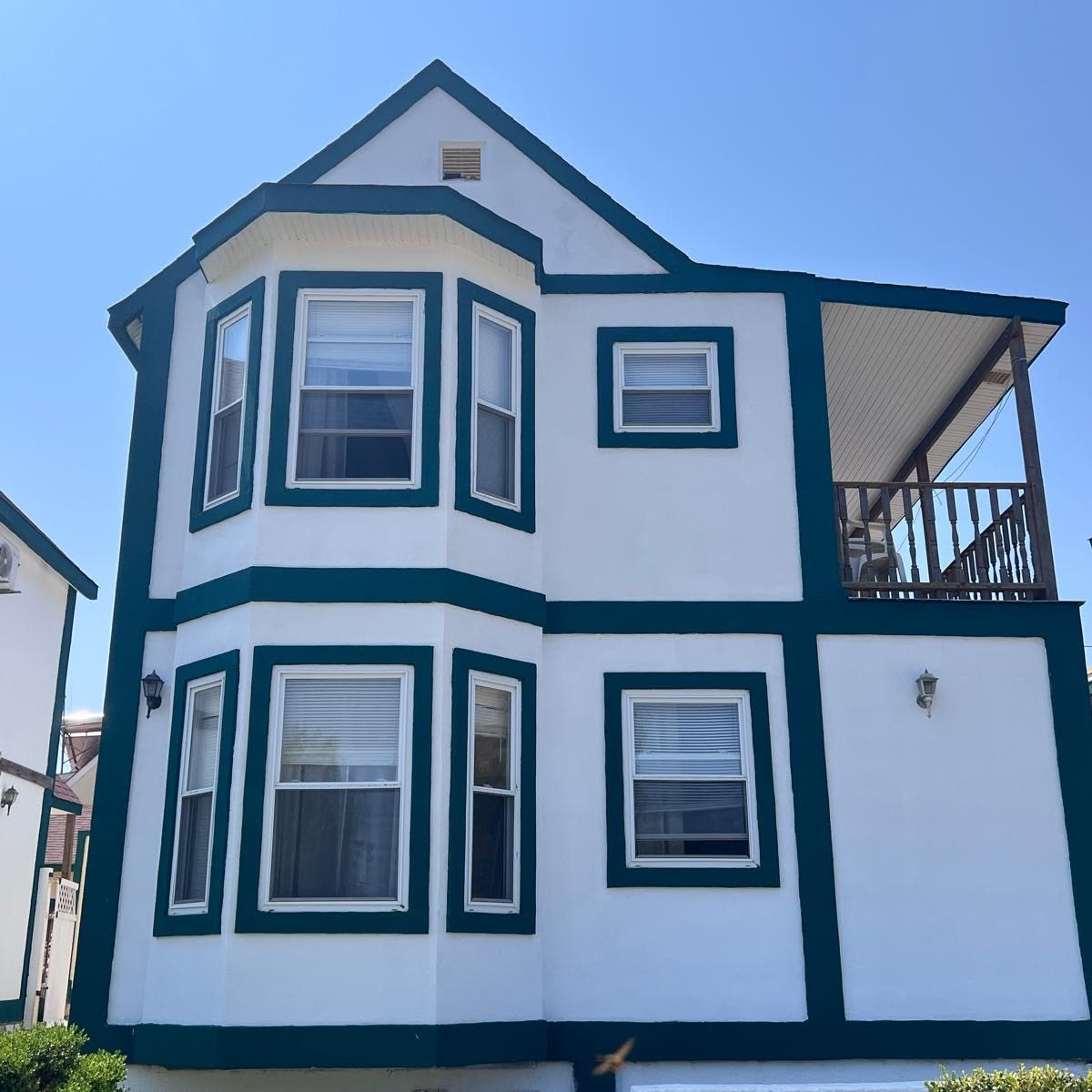
Building a house in Kefalonia: where to start
Building your own home on the island usually means four stages: finding a buildable plot, design and permits, construction, and handover. The plot is where most problems start, so have a licensed engineer confirm what can be built before you buy land.
Below we summarise the published figures and rules. They change often and vary by plot, so treat them as a starting point, not a quote.
This guide sets out general facts as of November 2026. It is not legal or engineering advice. Confirm everything for your plot with a licensed Greek engineer and lawyer.
How much does it cost to build a house in Greece?
There is no official figure, and published estimates differ by up to a factor of two. None is specific to the islands. As of November 2026:
- Spitogatos (March 2026) quoted about €1,150 per m² plus VAT for a standard house, excluding permits.
- OT.gr (September 2025) reported an average net construction cost of about €1,700 per m², up from about €1,200 a year earlier.
- Wise quotes €1,700 to €2,400 per m² for a traditionally built house, a figure that may be dated.
On top of land and construction, allow roughly 5% to 7% for design, permits and fees. Contractor invoices carry 24% VAT: the VAT suspension on new buildings covers sales of finished homes, not construction bills.
As a rough illustration only, a 120 m² three-bedroom house at €1,150 to €2,400 per m² would cost about €138,000 to €288,000 to build, before land, VAT where it applies, site works and fees. For a real figure, ask ELD for a quote on your plot and design.
How long does it take to build a house in Greece?
The permit stage is often the slowest part. Law-firm guides suggest a few months for straightforward cases, but in 23% of municipal building offices (YDOM) the average issuing time exceeds three months, and complex cases can take years.
Construction time then depends on the design, the size of the house and the season. Ask any builder for a written schedule covering design, permit, build and handover.
Who issues building permits in Greece?
Building permits are submitted, checked and issued online through the Technical Chamber of Greece e-Adeies platform. A licensed engineer prepares the application, and the municipal building service (YDOM) handles it. A preliminary approval can be obtained before the full permit.
- Outside town plans, a Green Fund fee also applies, reported as 5% of the contract budget or 5‰ of a detailed budget, between €250 and €5,000.
- The government plans to move building offices into a new national body (EOKED) with the Hellenic Cadastre, with full operation targeted for early 2027. This was not confirmed as of November 2026.
Can I build a house on agricultural land in Greece?
Often, but the rules are strict and changing. Outside town plans, the long-standing baseline is a plot of at least 4,000 m² with road frontage (commonly 25 m) on a legally recognised public road.
- Council of State rulings in 2023 tightened the road test: the plot must front a legally existing common-use road, not one created by the owners.
- Exceptions that let smaller, older plots be built on ended in December 2020, with a transition period.
- Typical cited limits on a 4,000 m² plot are about 186 m² of house, 15 m setbacks and a height of about 7.5 m for two storeys.
- A new national framework is reported to apply from 2027. Primary residences keep the 4,000 m² minimum, and other residential use is expected to face higher thresholds.
Sources disagree on timing and on frontage for main roads, so always get an engineer's written opinion on a plot before you buy.
Are timber-frame houses allowed in Greece?
We found no source stating any Greek ban on timber-frame homes. They go through the same e-Adeies permit as any other house, with an engineer-signed structural design. In Europe, timber buildings are designed under Eurocode 5 (EN 1995), used with Eurocode 8 (EN 1998) in seismic regions, and Greece applies the Eurocodes.
Timber framing also has a long earthquake record in the Ionian islands, for example the traditional timber-frame system of Lefkada.
ELD builds American timber-frame homes using certified lumber imported from the United States. ELD says its homes are designed for up to 60% energy savings; this is ELD's own figure, not an independent test, so ask us how it is calculated.
How do homes in Kefalonia cope with earthquakes?
Greece is divided into seismic hazard zones I, II and III (0.16, 0.24 and 0.36 g). Kefalonia is in the highest zone, 0.36 g. The island had earthquakes of magnitude 6.1 and 6.0 in January and February 2014.
Since 2012 Eurocode 8 has been applied alongside the Greek seismic code (EAK). Any new house on the island must have a structural design that meets the highest-zone standard, signed by a licensed engineer.
Buy a finished home or build your own?
Building gives you the exact house you want, but it takes longer and the plot rules add risk. Buying a finished home is quicker and you can see what you get. Read our guide to buying property in Kefalonia for the purchase side, and our long-term rental guide if you want to rent while you build.
Checklist before you buy a building plot
- Is the plot inside or outside a town plan?
- Does it meet the minimum size, currently 4,000 m² outside town plans?
- Does it front a legally existing public road, and by how many metres?
- What floor area, height and setbacks would be allowed?
- Is the title clear, and is the plot correctly recorded in the Hellenic Cadastre?
- Will the new 2027 framework change anything for your intended use?
Ask a licensed engineer to answer these in writing before you sign for any land.
How ELD can help
ELD has built homes in Kefalonia since 1991. We work with you from start to finish, with our own team on site:
- Land acquisition: finding and securing the right plot.
- Planning: practical guidance on design, layout and permits.
- Construction: built by our own team, managed hands-on.
- Final delivery: a finished home, with maintenance and security if you need them.
See the finish we deliver at Ermolaos Hillside Villas, look at the ranch house or the 5-bedroom villa with pool, or browse all properties. To ask for a build quote, send an enquiry or call +30 26710 93793.
Questions people ask
How much does it cost to build a house in Greece per m²?
Published estimates for 2025-2026 range from about €1,150 per m² plus VAT (a builder's standard quote) to about €1,700-€2,400 per m², before land, permits and site works. Ask for a quote on your own plot.
How long does a building permit take in Greece?
It varies by municipality. Law-firm guides suggest a few months for straightforward cases, but almost a quarter of building offices average over three months.
Can I build a house on a small plot outside a village?
Usually you need at least 4,000 m² with frontage on a legally recognised public road. Exceptions are narrowing, so have an engineer confirm buildability before you buy.
Is a timber-frame house safe in an earthquake zone?
Timber frames are designed under Eurocode 5 and Eurocode 8 for seismic areas. Kefalonia is in Greece's highest seismic zone, so the structural design must meet that standard.
Do I pay VAT when I build my own house?
Yes, contractor invoices carry 24% VAT. The VAT suspension on new buildings applies to sales of finished new homes, not to construction invoices.
Facts checked in November 2026. Laws, taxes and fees change: this guide is general information, not legal or tax advice. Confirm the details with a Greek lawyer, notary or accountant before you act.
Sources
- BuyGreece: Buying land and building a house in Greece (2026), citing Spitogatos and OT.gr
- Wise: Building a house in Greece
- Elxis: Everything you need to know before building your own house in Greece
- Elxis: Changes in taxation for homes in Greece
- Elxis: Building restrictions and regulations in Greece
- Nomika Themata: Zoning laws in Greece (April 2026)
- Protothema: Who will be allowed to build under the new framework from 2027
- Mitos (Greek government): Issue of building permits (e-Adeies)
- Mitos (Greek government): Preliminary approval of a building permit
- Protothema: Building permits to be processed digitally (November 2025)
- Protothema: A new era for building permits, transfer to the Cadastre
- European Commission JRC: Eurocode 5, design of timber structures
- ASCE Library: The traditional timber-frame system of Lefkada
- LODE project (Politecnico di Milano): Greek seismic zones
- Bulletin of Earthquake Engineering (Springer): Greek seismic code and Eurocode 8
- STRUCTURE magazine: Structural performance in the 2014 Kefalonia earthquakes